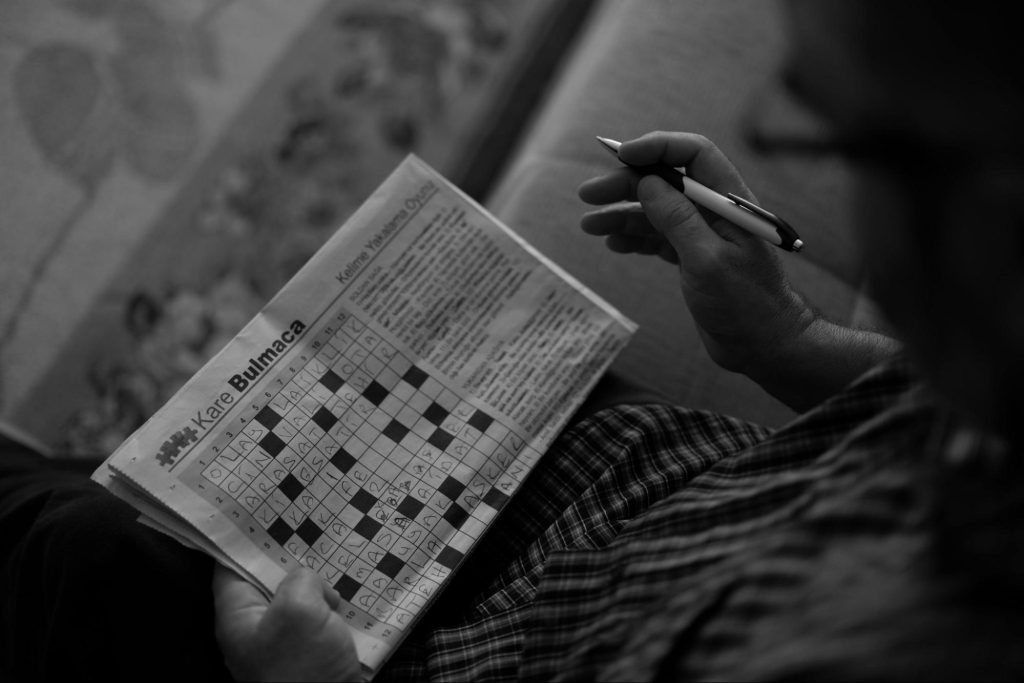


The wording puzzle is a very common way to use your time to serve the two benefits of relaxation and brain training. It might surprise some to learn just How? Still, they persevered. The cross had remote inscriptions of Roman and Greek times, where writing and squares were popular. And although the concept of making it an interactive game takes a little longer to follow, the idea of words can be read both down and over is something that has been with us for centuries.
A Brief History of Questions
While the 19th century viewed the riddles as “The Matthew Squares that appear in English newspapers, the puzzle game that we know for the first time appears in 1513. It was December 21, on that day, the New York World edition, and it actually formed a diamond, but had its familiar form “Across Archaeology and“ in the form of the alphabet, which is particularly recognized as the repetition of the Greek letters and the Roman scripts.
Although some of the clues are very simple even today (other three letters) are long. And while readers love this puzzle, but it doesn’t really grow strong until the publishers, Simon and Schuster, take this idea up and invent the ones that have the puzzles in them in the 1920s. Then, the dams opened, and the press everywhere began carrying a regular puzzle game, which remains the norm today. Today, puzzles even occasionally appear in language textbooks as a way to help students use problem solving skills to enhance learning ability.
Meet the Creator of riddles
Who’s Arthur Kade? He has come a long way to become editor of New York World. From Liverpool, in fact, with the first American home in Pittsburgh at the age of 19, in 1890. Your father was a journalist himself, which may have caused Arthur to seek the same job. When it appeared in 1513, the riddle was called a “the Encyclopedia – Cross, with change until a sorting error saw a print called a decimal, which seemed to be preferred.
Many of the things that we accept are the norm of modern puzzle games are the ideas of new people. He was the first to put the black squares in the puzzles, separate one from the other and create their symmetric shapes. He also did not want to be referred to as the creator of the puzzle, pointing to the ancient origin of the puzzle games without the necessity of Arthur’s prompt contribution, so we should testify.
The Evolution of Competitive Games

Many improvements have been made since that day. The council created the specimen, but others certainly chose it and changed themselves.
A name should be placed alongside the puzzle creator Margaret Farrar (ne Petherbridge). She was hired into the New York World and became editor for his quick puzzles. At first, she sent the puzzles to print without checking them, and she was terrified to see that many complaints could not be solved but turned out to be true. She became a cautious reader in every puzzle, and eventually created the puzzle games that were thought to be superior to other puzzles. After ruining his career to build a family, Farrar returned as the first editor of the New York Times in 1942.
By this time, across the Atlantic, Edward Powys Mathers had begun publishing “subscriptive puzzle games in the form of song code in the collection of letters of people under the name of“ Torquemada. ” The name was taken from Spanish critic Tomás de Torquemada, reflecting the regular joys of Mr. Mathers. Other improvements include the development of the puzzle games, a popular addition to holidays and special occasions, as well as large puzzles for the special puzzle solver.
Questions Over the Years
At first appearing, the puzzle game was viewed as a placeholder in newspapers with little more to use on paper. That cannot be said now—they have become an important part of the notes such as the New York Times and the paper corresponding to London, and when the first puzzle was printed in 1942, Margaret Farrar was quoted as saying it would become important to the national spirit. At the same time, seniors in Brewer Park used the puzzle as an recruitment test for potential codebreakers.
The decimals had time to go out of fashion, and had shown no sign of doing it. The puzzle application is growing popular, if there’s anything, and using puzzles as brain exercises gave them new life.
Continuous riddles
Speaking of brain training, the increasing focus on cognitive health is leading many of us – some of the older ones, but many of us don’t – to adopt the puzzle games as a way to keep our brains sharp. That’s certainly a great way to use these puzzles: a standard puzzle game that can get us to use vocabulary, thinking, long-term memory and short terming and help us train patience and focus on negotiations. They are also a great way to spend time with their families, with the historic skills of a member and the knowledge of sports culture each use to solve puzzles.
The Joy of Transmission
Here are some of the things you may not know about the puzzle game, some of which may also help you finish the puzzle game in the future.
- Some words rarely used in everyday life appear in puzzles due to their utility in the puzzle arrangement. The abbreviations with many vowels such as “Etui shrimp, meaning a small case, and“ Obis supplement the Japanese, are common examples of this phenomenon called “Mini crossword hintese.
- French puzzles typically use two letters, unlike other puzzles, and are often disproportionate.
- The cross used the standard Korean alphabet using a syllable on a square, not a single letter, meaning that many letters “can be used in a square because of the style of language.